

Mapping & Winning over the Buying Committee: The Journey Guide
Make your champions love their jobs. Discover how to wrangle the messy buying committees into order quickly!Do two heads think better than one? In some cases, yes.
But multiply that by about 12 heads, and you just might find yourself in a 12 Angry Men situation. While 11 of you may easily agree with one another, it only takes one dissenting voice to throw the whole committee into chaos.
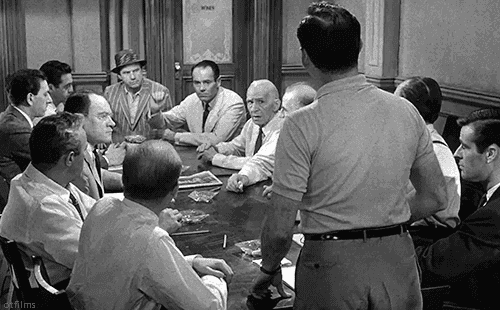
This scenario essentially captures the essence of the B2B decision-making process – a journey often characterized by lengthy discussions, conflicting viewpoints, and the occasional showdown of wills.
It’s a rollercoaster that can test the sanity of everyone involved, from sales teams eagerly awaiting approval to the weary members of the buying committee striving to make the right call.
That’s the worst of the worst-case scenarios. Next, we’ll be talking about the best-case scenario, or how to transform a chaotic decision process into winning deals.
What Is a Buying Committee (and Why Does It Often Miss Its Own Point)?
A buying committee is essentially a team of people within a company tasked with making purchasing decisions. It involves multiple stakeholders in the decision-making process and is meant to be a smart way to avoid potential risks.
See, buying big-ticket items without everyone’s input can lead to budget blowouts, system hiccups, or getting stuck with a lemon of a product. And let’s not forget the “Legalese,” as skipping compliance checks or skirting contractual obligations could land everyone in hot water, fast.
The committee’s size can vary depending on factors such as:
- The complexity of the purchase
- The structure of the organization
- The budget allocated for the purchase, and
- The level of involvement from each department.
But, if we’re looking at an estimate, it typically comprises 3 to 14 members representing different departments or functions involved in the decision-making process.
Here’s a breakdown of some key roles within a buying committee:
- Procurement/Purchasing: These professionals handle buying decisions, from negotiating deals with suppliers to ensuring quality and value.
- Finance/Accounting: They're the financial experts, analyzing costs and returns to make sound decisions.
- Operations/Production: Responsible for keeping operations smooth, they assess how purchases fit into existing workflows.
- IT/Technology: The tech-savvy people ensuring compatibility and security for tech needs.
- Marketing: They evaluate how purchases align with marketing strategies and enhance brand positioning.
- User/End Users: Providing crucial insights into usability and functionality for those who'll actually use the products or services.
- Executive Leadership: Senior decision-makers aligning purchases with strategic goals.
- Legal/Compliance: Ensuring purchases meet legal and regulatory standards.
While this diverse group may seem like they’d work together without a problem, it’s not always the case. With everyone bringing their own perspective to the table, discussions can sometimes resemble a room full of attention-hungry students.
However, when these heads are in sync and all aligned like a neat stack of cards, that’s when you know you’ve achieved any salesperson’s ultimate goal. As a sales professional, it’s your job to wrangle them and make sure everything is as smooth as possible.
(We’ll mention a tool that can help you in a sec!)
The B2B Sales Process Is as Complicated as Ever, and Buyers Know It
These days, thanks to a near-endless availability of information online, buyers now have the upper hand.
They can scour websites, read reviews, dive into case studies, and eat up industry reports – all without ever having to engage directly with a sales rep. This newfound independence means they’re making more informed decisions on their terms.
Also, keep in mind the rise of self-servicing options and digital channels. Many buyers would rather navigate the buying journey by themselves, exploring products and services at their own pace and without feeling the pressure to make a quick decision.
With all that in mind, how can you make sure your sales team is well-prepared, tight-knit and ready to wow the buying committee all the way to the virtual handshake?
Follow me.
Access to Their Dynamics: How Mapping the Buying Committee Increases Your Chances of Winning Them Over
“Mapping” a buying committee sounds like detective work. And it is. It’s the process of uncovering who's who in the decision-making process within a prospective customer's organization.
You need to identify the key decision-makers, influencers, and gatekeepers.
Next, you need to pinpoint their roles, priorities, and relationships within the organization.
All with the ultimate goal of securing buy-in from all the right players and paving the way for a smooth close. It’s research at its finest.
However, research on its own isn’t effective if it isn’t streamlined and automated, wherever possible, and with the right tools.
A Digital Sales Room Is a Priority
Without a Digital Sales Room like Journey, you'll find yourself caught in the never-ending whirl of the B2B cycle.
If you don’t have a single place for every piece of information each stakeholder needs…then not even the most enthusiastic champion will be able to advocate for your product internally. You'd risk leaving them looking a bit like this:

Here’s what each of them typically needs to see to be convinced that your product is for them.
Economic Buyers Need…
- An overview dashboard. They crave high-level metrics and financial insights presented in a digestible format.
- Case studies and testimonials. Sharing tangible proof from similar organizations can really sway their decision, giving them tangible evidence of successful outcomes. You can use testimonial collection software to collect reviews and share them inside Journeys
Don't just throw numbers at them! Highlight how your solution enhances efficiency and productivity. Discussing the total cost of ownership, including maintenance and support expenses, can drive the point home.
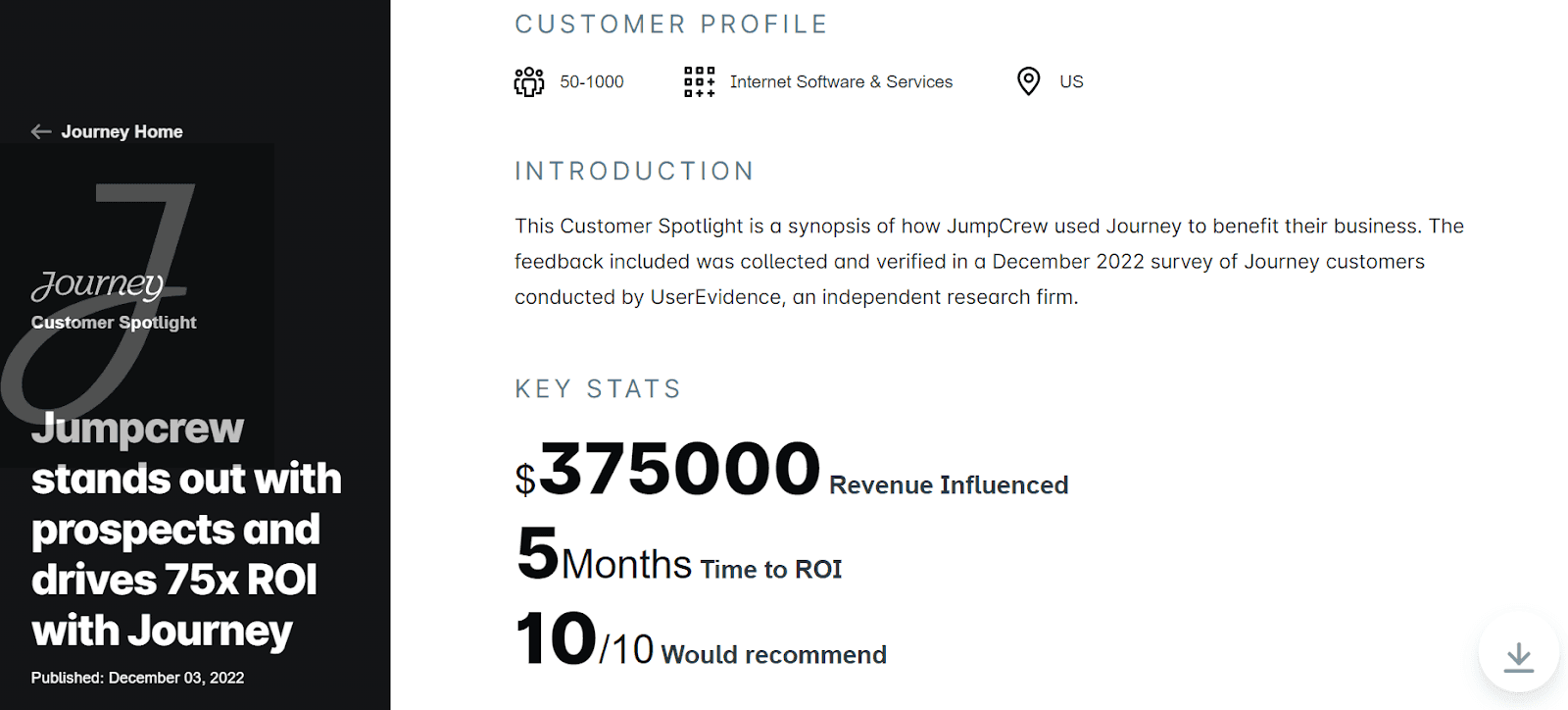
For example, here’s one of Journey’s popular deal-closing case studies:
Tech Buyers Need…
- Technical specifications. Give them comprehensive information on compatibility, scalability, security, and integration capabilities.
- Product demos and trials. Let them roll up their sleeves and get hands-on. Offering product demos, free trials, or sandbox environments allows tech buyers to test-drive the solution and assess its functionality firsthand.
Be sure to detail how your product integrates with existing systems and offer technical support services to address any concerns they might have.
Champions Need…
- Success stories. Champions thrive on success stories. Highlighting the positive experiences of other customers can reinforce their confidence and support.
- Implementation roadmaps. Help them see the path forward clearly. Providing an implementation roadmap that outlines key milestones, timelines, and resource requirements can give them the confidence to move forward with your solution.
End Users Need…
- A User Experience (UX) showcase. End users want simplicity and functionality above all else. Demonstrate the user interface, workflows, and features from their perspective.
- Training and support resources: Support their journey every step of the way. Give them training materials, user guides, and FAQs to prove a smooth transition and ongoing support.
Actively seek feedback from end users during demonstrations or trials. Being open to their concerns and changing your pitch based on their input helps improve your offering and demonstrates that you value their opinion.
Golden Tip: Make Your Demos Interactive
Allow the buying committee to self-serve and explore the product at their own pace. Future pacing helps them envision the product as an integral part of their lives, without any immediate commitments, allowing for a more relaxed exploration of its benefits.
When we’re demoing Journey to new users, we can’t go without the interactive demo we’ve created with the help of Supademo.
Consider Frameworks Your New Best Friends
Similar to how marketers use frameworks like PAS (Problem, Agitation, Solution) and AIDA (Attention, Interest, Desire, Action), sales teams should have their own go-to methodologies. Here are a couple:
Sandler Selling Systems
A sales methodology born in the swinging '60s, the Sandler Selling System focuses on building rapport, uncovering needs, and qualifying prospects in a way that feels more like a casual chat than a sale. Its key principle includes reshaping behaviors – both yours and the prospect's – to create a more collaborative sales dance.
By setting the stage with clear expectations right from the start and offering a solution that feels like a sigh of relief, teams can ease prospects into the process without any pressure tactics.
MEDICC
MEDICC is another framework for qualifying opportunities effectively. It involves finding the Economic Buyer, known as the one who holds the purse strings and can make the final call.
In addition, you should identify someone within the prospect's organization who's got your back and can help, ahem, Champion your cause.
Next, you should figure out what factors matter most to your prospects when they're weighing their options, such as their decision process, pain points, and motivators.
These frameworks offer a structured approach to building relationships, qualifying leads, and closing deals. all while keeping things cool, calm, and collected.
Build Relationships Based on Outstanding Support
The buying committee is in it for the long haul. And you can't build a solid relationship on shaky ground.
When it comes to trust, who would you prefer? Someone rushing through a process or someone who goes out of their way to give you a great experience?
To nurture trust and loyalty, it's crucial to provide the buying committee with access to a dedicated support team. They'll handle any questions, concerns, or issues that pop up with grace and expertise.
The guides, tutorials, and FAQs we mentioned aren’t just helpful to the end-users. The entire buying committee will appreciate your effort in ensuring their decision doesn’t involve any headaches. In the end, you’ll be improving their overall experience and showing them that you're in it for the long haul too.
Eyes on the Prize: the Champion
If we were talking about Myers-Briggs personality types, a Champion would be this fellow…

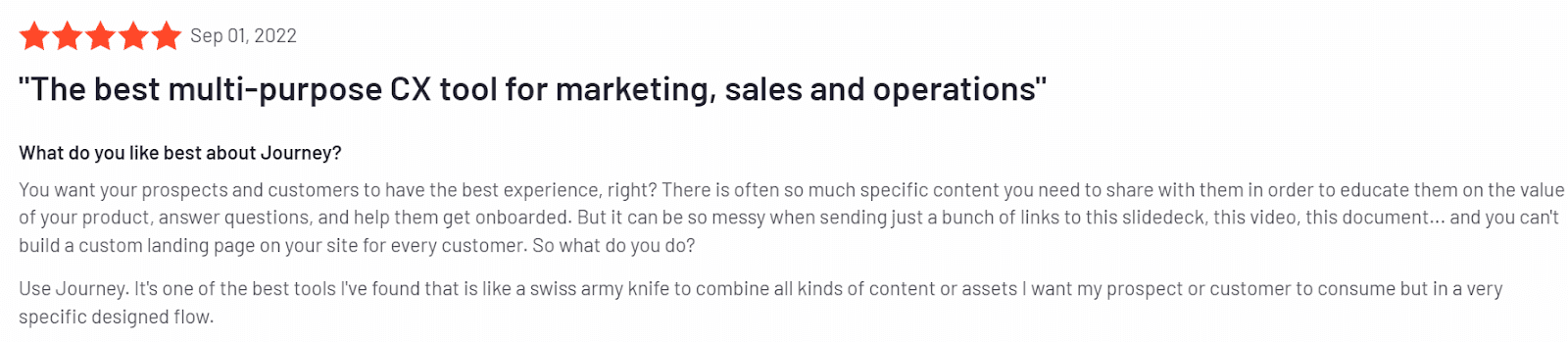
Because they’re your Mediator, AKA your ally within the organization, bridging the gap between your solution and the buying committee. They're the ones who smooth out the rough patches, rally the troops behind your solution, and guarantee everyone's on the same page.
They're your godsend when it comes to overcoming resistance and driving consensus among the buying committee members.
But you need to help them help you by providing all the tools they need to advocate on your behalf. You can do that by making internal selling as easy as possible.
So, how do you do that?
If you’ve done your initial detective work and have a DSR in place, you’re more than halfway towards arming your champion with clear, concise responses to any stakeholder objections.
Whether it's additional messaging, case studies, or customized presentations, ensure they're equipped with everything they need to make their case effectively.
Keep an Eye on Progress
Back in the day, navigating the sales process meant flying completely blind, with no indication of progress and plenty of nail-biting uncertainty. You'd spend precious time on deals that went nowhere, leaving you frustrated and stuck in a perpetual waiting game.
It was stressful, to say the least, adding another layer of anxiety to the already daunting task of closing deals. Deals that could have been fruitful often got bogged down, costing you valuable opportunities.
Thankfully, tools like Journey exist today. Now, you can easily track and monitor how each stakeholder engages with your digital sales room in real time.
This tool gives you a full view of who's checking out your sales materials at this very moment. You can see exactly who's interested, how much of your content they've consumed, and how many times they've revisited it. Along with the parts they always skip, so you can get rid of those for good.
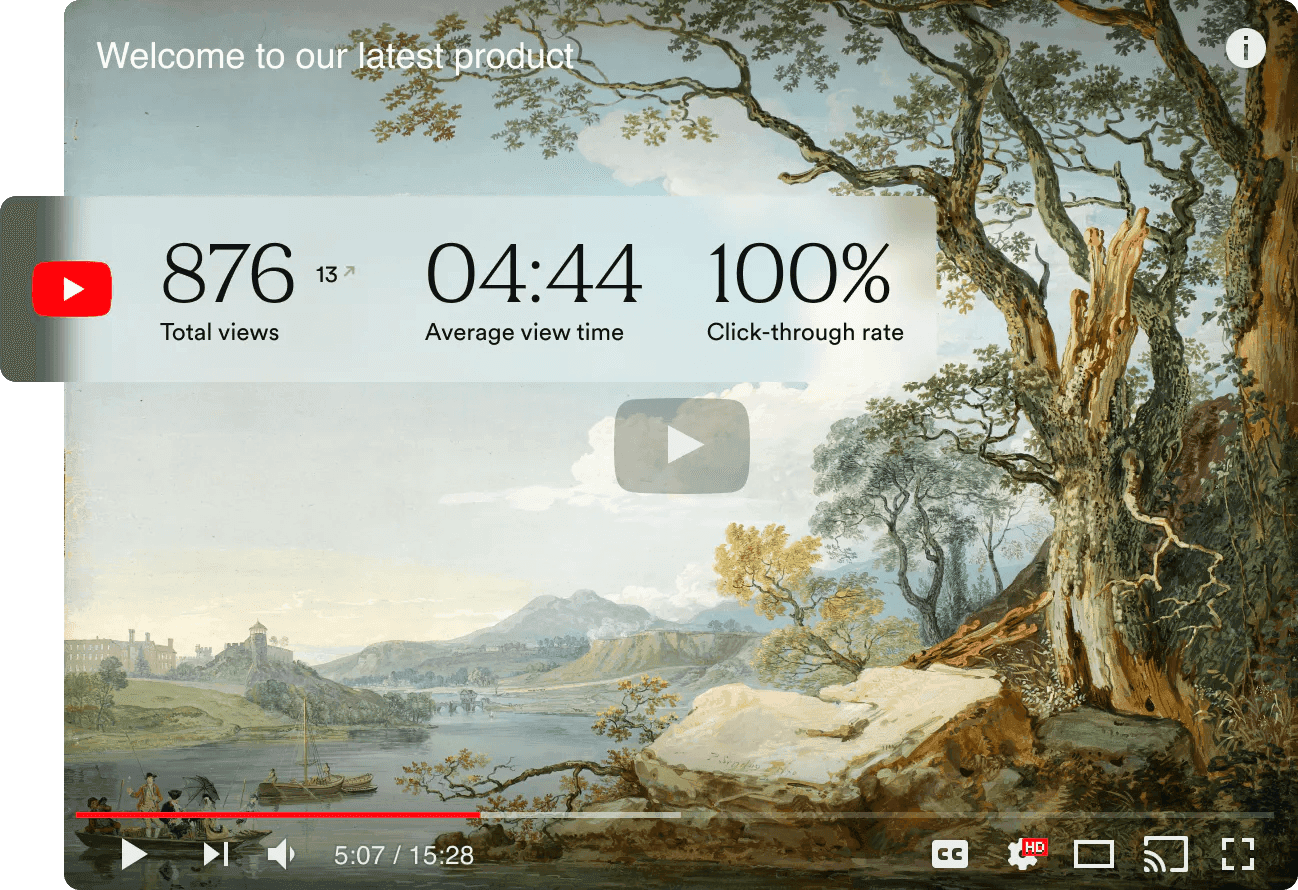
It gives you the power to know exactly when buyers lose interest, so you can act fast to regain their attention. By knowing where they stand, you can adjust your strategy accordingly, whether it's following up with more information or addressing any concerns they may have.
Journey also gives you the ability to swerve dead-end deals and focus your sales efforts where they’re highly likely to drive results.