
Interactive Content and Real-Time Analytics

Interactive Content and Real-Time Analytics
Want to boost engagement by over 50% and double your conversion rates? Interactive content with real-time analytics is the answer. Traditional content sharing often frustrates users with cluttered emails, generic messaging, and limited feedback. Interactive tools solve these issues by providing personalized, engaging experiences and instant insights into user behavior.
Key Takeaways:
- Engagement: Interactive content increases engagement by 52.6% compared to static formats.
- Conversion: 70% conversion rates with interactive content vs. 36% for traditional methods.
- Real-Time Feedback: Track user behavior instantly to adapt and optimize strategies.
- Personalization: Tailor content to individual preferences, boosting loyalty and trust.
- Accessibility: Simplify sharing with single links, inclusive for all users.
Quick Comparison:
| Feature | Traditional Content Sharing | Interactive Content with Real-Time Analytics |
|---|---|---|
| Engagement Rates | Low | 52.6% higher |
| Conversion Rates | 36% | 70% |
| Personalization | Generic | Dynamic and tailored |
| Analytics | Basic | Real-time, detailed insights |
| Ease of Access | Cluttered | Simple, single link |
Interactive platforms like Journey.io streamline content sharing and provide actionable insights. They’re not just tools - they’re game-changers for businesses looking to build stronger relationships and achieve measurable results.
Interactive Content: How to Measure, Optimize and Scale
1. Traditional Content Sharing
Traditional methods of sharing content often create unnecessary hurdles, making it harder to build meaningful connections. These outdated practices rely on fragmented channels, leaving prospects and clients feeling frustrated, confused, and disengaged.
Content Accessibility
One of the biggest headaches with traditional content sharing is how hard it can be for recipients to find and use the information they need. Picture this: multiple emails filled with attachments or scattered links. Recipients are left sifting through clutter to locate critical materials. Add in email overload, and important content can easily get buried. Then there’s the hassle of juggling login credentials or navigating clunky file-sharing systems, which only adds more friction to the process.
Here’s a telling statistic: 88% of employees and executives associate poor communication with workplace issues. This highlights how these outdated sharing methods don’t just inconvenience recipients - they can strain business relationships and hurt outcomes. On top of that, the lack of interactive feedback in these systems makes effective communication even harder.
Engagement Insights
Another major flaw in traditional content sharing is its one-way nature. These methods don’t allow for interaction or timely feedback. Without knowing which parts of a proposal catch someone’s attention or how long they spend reviewing materials, organizations lose valuable opportunities to adapt their strategy. Limited tracking tools make it nearly impossible to figure out what resonates and what gets ignored.
Personalization
Then there’s the issue of personalization - or rather, the lack of it. Traditional approaches tend to rely on a one-size-fits-all strategy, which doesn’t sit well with today’s buyers. Sending the same generic presentation to a startup founder and a Fortune 500 executive? That risks coming across as tone-deaf. Modern audiences expect tailored communication that reflects their unique needs. In fact, 72% of consumers want businesses to recognize them as individuals and understand their interests. Without the ability to adapt content based on recipient preferences or behavior, organizations miss out on opportunities to build stronger, more personal connections.
Impact on Relationship-Building
These challenges - difficulty accessing content, lack of interactivity, and impersonal communication - can seriously undermine relationships. When stakeholders repeatedly encounter obstacles, like struggling to access vital information or receiving generic messaging, they may start to doubt an organization’s reliability. Consider this: 71% of customers leave a company because of poor customer service. On the flip side, companies that grow faster tend to generate 40% more of their revenue from personalized experiences compared to slower-growing competitors.
These numbers show just how much is at stake. Failing to deliver a seamless, tailored content experience can erode trust and hold back business growth. To overcome these barriers, modern organizations need to embrace tools that offer interactive content and real-time analytics to elevate their communication with stakeholders.
2. Interactive Content with Real-Time Analytics (e.g., Journey.io)
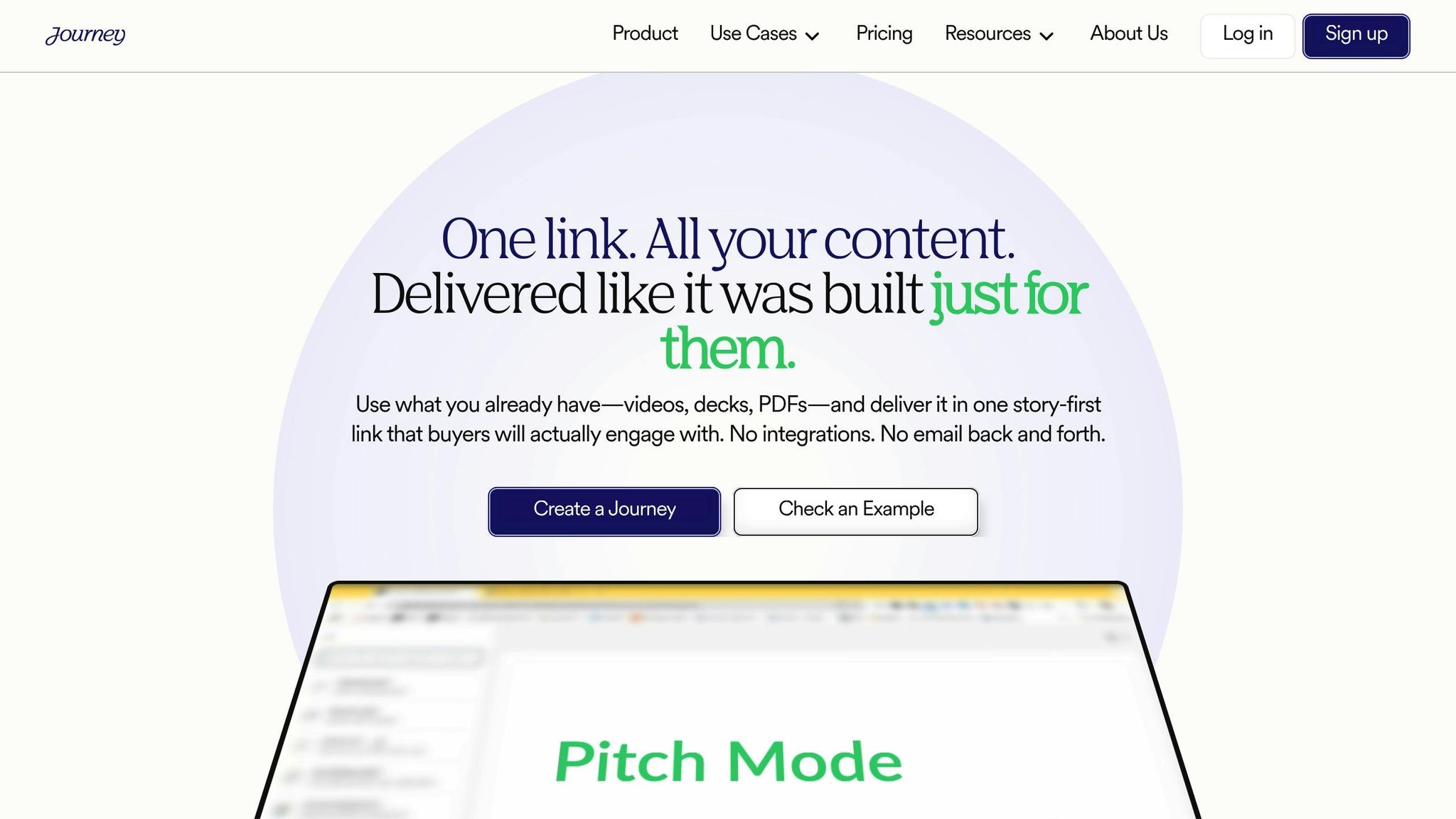
Interactive content platforms with real-time analytics are reshaping how businesses build relationships. They tackle the common challenges of traditional content sharing by offering smooth, engaging experiences and instant insights into audience behavior.
Content Accessibility
One of the standout features of interactive content platforms is their ability to make sharing effortless and accessible. Instead of juggling multiple files or links, recipients can access everything through a single, user-friendly link, designed to work seamlessly across devices. This approach not only simplifies navigation but also ensures inclusivity. For example, one in six people globally experience some form of disability, and these platforms allow everyone to engage with content equally.
Journey.io is a great example of this. It brings together PDFs, videos, text, and AI-generated visuals into a single, cohesive experience. There's no need for login credentials or complicated file systems - everything is organized and ready to use.
Accessibility isn't just a bonus; it’s a game-changer. Websites designed with accessibility in mind are 1.5 times more likely to retain users. Plus, the economic cost of inaccessible websites is estimated at $16.8 billion annually. By prioritizing accessibility, these platforms ensure that content reaches its audience without unnecessary friction, which ultimately strengthens business relationships.
Engagement Insights
Real-time analytics turn content sharing into a two-way interaction. Unlike traditional methods, where you’re left guessing how your audience responds, these platforms provide instant feedback on how your materials are being used.
"Real-time analytics provides immediate insights into how users are interacting with your website, apps, and marketing campaigns, allowing you to make instant, data-driven decisions." - Louis Pretorius
With these tools, you can see which sections grab attention, how long viewers spend on specific content, and where their interest starts to wane. Interactive content is 81% more effective at capturing attention compared to static formats. In fact, organizations using real-time analytics have reported a 30% boost in operational efficiency and decision-making accuracy. This means teams can quickly identify trends and address potential issues before they escalate, keeping everything running smoothly.
Personalization
Real-time feedback also opens the door to personalized content. Instead of sending the same generic materials to everyone, interactive platforms allow you to tailor content based on individual preferences, behaviors, and engagement patterns.
Consider this: 84% of customers say they value being treated as individuals, and 72% only interact with personalized messages. With interactive tools, personalization becomes scalable. Brands like Aveda, Walmart, and Starbucks are already using features like customized quizzes and location-based notifications to deliver content that feels uniquely tailored to each user.
This level of customization has a clear impact on customer loyalty. Sixty percent of consumers say they become repeat customers after a personalized shopping experience. Interactive platforms make it possible for businesses of all sizes to deliver this kind of tailored engagement.
Impact on Relationship-Building
By combining easy access, real-time insights, and personalized messaging, interactive content helps build trust and strengthen relationships. When stakeholders can quickly find relevant information and feel that their needs are being met, trust develops naturally. Sixty percent of business leaders report that real-time analytics has significantly improved customer retention for their companies.
Transparency plays a big role here too. When recipients can access content in their preferred format and on their own schedule, it creates a sense of control and trust. Features like commenting and feedback further enhance communication, offering opportunities for dialogue that traditional methods simply can’t match. Companies that prioritize customer experience see 80% better performance compared to their competitors. Interactive platforms make this level of engagement not just possible but practical.
sbb-itb-e400484
Pros and Cons
When deciding between traditional content sharing and interactive content with real-time analytics, it's essential to weigh the benefits and challenges of each. These approaches impact everything from cost and deployment time to audience engagement and performance metrics. Understanding these trade-offs helps organizations craft a content strategy that aligns with their goals and resources.
| Aspect | Traditional Content Sharing | Interactive Content with Real-Time Analytics |
|---|---|---|
| Setup Cost | Low initial investment | Higher upfront costs for development and tools |
| Time to Deploy | Quick to implement | Longer development and design time |
| Technical Requirements | Basic email and file sharing skills | Specialized coding and design expertise needed |
| Engagement Rates | Limited interaction and feedback | 52.6% higher engagement than static content |
| Conversion Performance | 36% conversion rate for passive content | 70% conversion rate for interactive content |
| Analytics Depth | Basic open rates and downloads | Real-time behavioral insights and user journey tracking |
| Personalization | One-size-fits-all approach | Dynamic content adaptation based on user behavior |
| Load Times | Fast loading for simple files | Potentially slower due to interactive features |
| SEO Visibility | Easy for search engines to crawl | Search engines face challenges indexing interactive elements |
| Scalability | Easy to scale across large audiences | Performance issues may arise with high traffic |
Cost considerations often drive the decision-making process. Traditional content sharing is budget-friendly, typically requiring only the use of email platforms and file storage. On the other hand, interactive content platforms, such as Journey.io, demand higher upfront investments due to their advanced features and tools designed to boost engagement.
When it comes to performance metrics, interactive content clearly outshines its traditional counterpart. For example, interactive content sees double the conversions and generates four to five times more page views compared to static formats. Additionally, visually engaging content like online quizzes is 40 times more likely to be shared on social media platforms, making it a powerful tool for broadening reach.
Interactive platforms also offer real-time insights into user behavior, enabling organizations to make on-the-fly adjustments to optimize their strategies. This level of detail is not possible with traditional content, which typically provides only basic metrics like open rates and downloads.
However, the complexity of implementation varies significantly. Traditional content sharing relies on skills that most teams already possess, such as email and file sharing capabilities. In contrast, creating interactive content requires collaboration between designers and marketers to ensure it’s both engaging and user-friendly.
Another consideration is the challenge of evaluating interactive content's impact. Gathering feedback can be more complex, so organizations need to plan ahead for how they’ll measure success and adapt their strategies accordingly.
Ultimately, the choice between these approaches depends on an organization’s priorities, resources, and long-term goals. While traditional methods are often sufficient for straightforward information sharing, interactive content offers deeper engagement and detailed audience insights that can lead to better business outcomes. By carefully weighing these pros and cons, businesses can align their content strategies with their broader objectives.
Conclusion
The move from traditional content sharing to interactive formats with real-time analytics is reshaping how businesses connect with their audiences and achieve results. Unlike outdated, piecemeal approaches, platforms like Journey.io offer seamless, engaging experiences while providing real-time insights into user behavior.
Interactive content stands out with 52.6% higher engagement rates compared to static formats. Moreover, 93% of marketers believe it’s more effective for educating buyers. On top of that, 87% of B2B marketers say the insights gained from interactive content are more meaningful than those from static alternatives. Even tools like interactive quizzes have shown impressive results, boosting lead generation by up to 25%. These numbers highlight the growing importance of adopting interactive strategies.
"Interactive content works because it does two things: it puts us in the driver's seat and it makes us feel like we're the only driver on the road." - Helen Barreto, Forbes Staff
To stay competitive, businesses need to invest in tools that combine interactive content creation with real-time analytics. These tools not only provide immediate, actionable insights but also help shorten sales cycles and strengthen customer relationships. Considering that 84% of consumers are more likely to buy from brands offering personalized experiences, waiting too long to adapt could mean missed opportunities.
The question isn’t whether businesses should embrace interactive content and analytics - it’s how quickly they can implement these tools to engage buyers at every stage of their journey.
FAQs
How does interactive content with real-time analytics boost user engagement compared to traditional methods?
Interactive content combined with real-time analytics offers a far more dynamic and engaging experience compared to traditional content-sharing methods. Instead of passively consuming static formats, interactive content invites users to actively participate, leaving a lasting impression and creating a stronger connection with your audience.
Adding real-time analytics into the mix amplifies this effect by providing instant feedback on user behavior. With these insights, businesses can tweak and adjust their content on the fly, crafting experiences that feel personalized and relevant. Together, these tools not only boost engagement but also enhance user satisfaction and deliver measurable improvements for your business.
What challenges and costs should businesses consider when adopting interactive content platforms like Journey.io?
Adopting an interactive content platform like Journey.io isn't without its challenges or expenses. One of the main difficulties lies in ensuring that interactive features function smoothly across various devices and platforms. Any hiccups here can frustrate users and potentially harm engagement. Another obstacle is the need for specialized skills to create top-tier interactive content, which can be tricky for businesses lacking in-house expertise.
On the financial side, the cost of developing advanced interactive content can vary significantly, typically falling between $2,000 and over $10,000 per project, depending on how complex the content and features are. Beyond the initial investment, businesses should also factor in ongoing maintenance and updates to keep the platform running effectively. To make the most of this investment, it's crucial to weigh these costs against the potential return and assess whether the benefits justify the expense.
How can businesses measure the impact of interactive content on customer engagement and conversions?
Businesses can assess how well their interactive content performs by keeping an eye on a few important metrics: engagement rates, conversion rates, and customer feedback.
Engagement rates reveal how effectively the content grabs and holds attention. This includes tracking factors like how much time users spend on the content, how often they interact with it, and whether they complete specific actions within it. These insights show whether the content resonates with the audience.
Conversion rates, on the other hand, measure how many users take meaningful steps after interacting with the content. Whether it’s signing up for a newsletter, registering for a service, or making a purchase, this metric highlights the content’s ability to drive action.
Finally, feedback from customers - gathered through surveys or polls - offers a direct line to understanding their satisfaction and preferences. This information helps businesses fine-tune their approach to better meet audience needs.
Using real-time analytics tools, businesses can track these metrics as they happen, enabling them to make informed adjustments to their content strategies and build deeper connections with their customers.
Related Posts