
AI-Driven Visual Trends for B2B Marketing

AI-Driven Visual Trends for B2B Marketing
AI is transforming how B2B marketers create and use visuals. Here's what you need to know:
- Why It Matters: Visuals increase engagement and retention. For example, Spotify used AI to cut bounce rates by 83% and generated $2.3M in 60 days.
- AI Tools: From generating images (DALL·E, Midjourney, Stable Diffusion) to creating interactive dashboards (Journey.io, Tableau, Power BI), AI makes visuals faster, cheaper, and more personalized.
- Key Trends:
- Automated design for consistent branding.
- Smart data visualizations for clearer insights.
- Real-time personalization tailored to audience needs.
- Applications: Use AI for faster content creation, A/B testing, and platform-specific optimization (e.g., LinkedIn, email, social media).
- Video Tools: AI simplifies video production with text-to-video, dynamic overlays, and engagement tracking.
Takeaway: AI-powered visuals save time, cut costs, and boost engagement, helping B2B marketers connect with their audiences more effectively.
The Integration of Artificial Intelligence and B2B Marketing
AI-Generated Images for B2B Marketing
B2B marketers are tapping into AI image generation to create branded visuals that align with their audience's preferences. These tools provide the speed and efficiency needed to produce high-quality imagery for campaigns. By building on past visual trends, AI-generated images offer a tailored approach to branding in the B2B space. This guide explores how to use them effectively, covering tools, benefits, and strategies.
Why Use AI-Generated Images
AI-generated images can enhance B2B campaigns in several ways:
- Cost Savings: Simplifies the creative process, reducing design expenses and overhead.
- Faster Turnaround: Speeds up image creation, allowing campaigns to launch more quickly.
- Customization: Enables A/B testing and audience-specific variations to improve engagement.
- Brand Consistency: Ensures visuals align with established branding guidelines.
Top AI Image Generation Tools
Different tools cater to various creative needs:
- DALL·E 3: Great for creating photorealistic images for business scenarios and product mockups.
- Midjourney V6: Known for its artistic and abstract styles, perfect for unique brand visuals and infographics.
- Stable Diffusion XL: Offers advanced customization to maintain a consistent brand aesthetic.
Tips for AI Image Creation
To get the most out of AI tools, consider these strategies:
- Refine Your Prompts: Include specific details like industry terms, brand colors, preferred styles, composition, and audience context.
- Stick to Brand Guidelines: Use your brand's color palette, integrate logos where needed, and follow visual style guides to keep a cohesive look.
- Optimize for Platforms: Tailor images for different formats, such as:
- LinkedIn posts (1,200 x 627 pixels)
- Email headers (600 x 200 pixels)
- Website banners (1,920 x 1,080 pixels)
- Social media stories (1,080 x 1,920 pixels)
When using AI-generated images, focus on visuals that are professional, relevant, and aligned with your brand's identity. These tools allow you to streamline the process while keeping your marketing message sharp and effective.
Data Visualization with AI
AI tools simplify complex data by turning it into clear, interactive visuals that help guide decisions.
Making Data Easy to Understand
AI-powered visualization tools analyze data to detect patterns and suggest the best chart types and color schemes to showcase trends effectively.
Some standout features include:
- Automated Pattern Detection: Spotting hidden correlations and trends in your data.
- Smart Layout Optimization: Adjusting visual elements for better clarity and impact.
These tools create visuals that form the backbone of engaging and interactive dashboards.
Building Interactive Charts
Interactive visualizations allow users to explore data at their own pace, focusing on the details that matter most. AI makes navigating through layered data much more intuitive.
Here are some tips for creating interactive charts:
- Start with broad insights and let users drill down into specifics.
- Add filtering options to focus on particular data points or time frames.
- Use hover effects to reveal extra details without cluttering the view.
- Implement smart zooming to explore sections while keeping the bigger picture in mind.
Data Visualization Software Guide
The right software can elevate your data storytelling by combining these techniques with powerful tools. Here are some AI-driven platforms to consider:
| Platform | Key Features | Best For |
|---|---|---|
| Journey.io | - Interactive content creation - Real-time engagement tracking - AI image generation - Multi-format content embedding |
Content-rich presentations and reports |
| Tableau | - Advanced analytics - Custom dashboards - Predictive modeling |
Detailed data analysis and visualization |
| Power BI | - Real-time analytics - Natural language querying - AI-powered insights |
Enterprise-level reporting |
Journey.io is particularly appealing for B2B marketers. It excels in combining diverse content into polished, interactive presentations. With this platform, you can:
- Create dynamic visualizations that incorporate embedded media.
- Monitor viewer engagement in real time.
- Use AI tools to assist in generating visual content.
- Combine multiple data formats into a single, shareable link.
When choosing software, focus on tools that handle complex data, offer interactivity, and integrate smoothly into your workflow.
sbb-itb-e400484
AI-Powered Visual Personalization
AI is changing the way B2B marketers approach visual content. With this technology, marketers can now create visuals that adjust in real time to fit different audience segments, making interactions more engaging and relevant for potential clients.
Real-Time Visual Customization
AI tools analyze user data and behavior to fine-tune visuals on the spot. This means marketers can:
- Adjust image styles to match audience or industry preferences.
- Align color schemes and design complexity with brand guidelines and engagement goals.
- Customize data visualizations to suit the needs of various decision-makers.
These real-time updates help create campaigns that resonate with audiences on a deeper level, paving the way for more effective marketing strategies.
Successful B2B Visual Campaigns
B2B companies are already using interactive platforms to craft campaigns that stand out. By packaging case studies tailored to specific industries, tracking user engagement, and tweaking content based on viewer behavior, these campaigns successfully capture the attention of decision-makers.
Using Journey.io for Custom Content
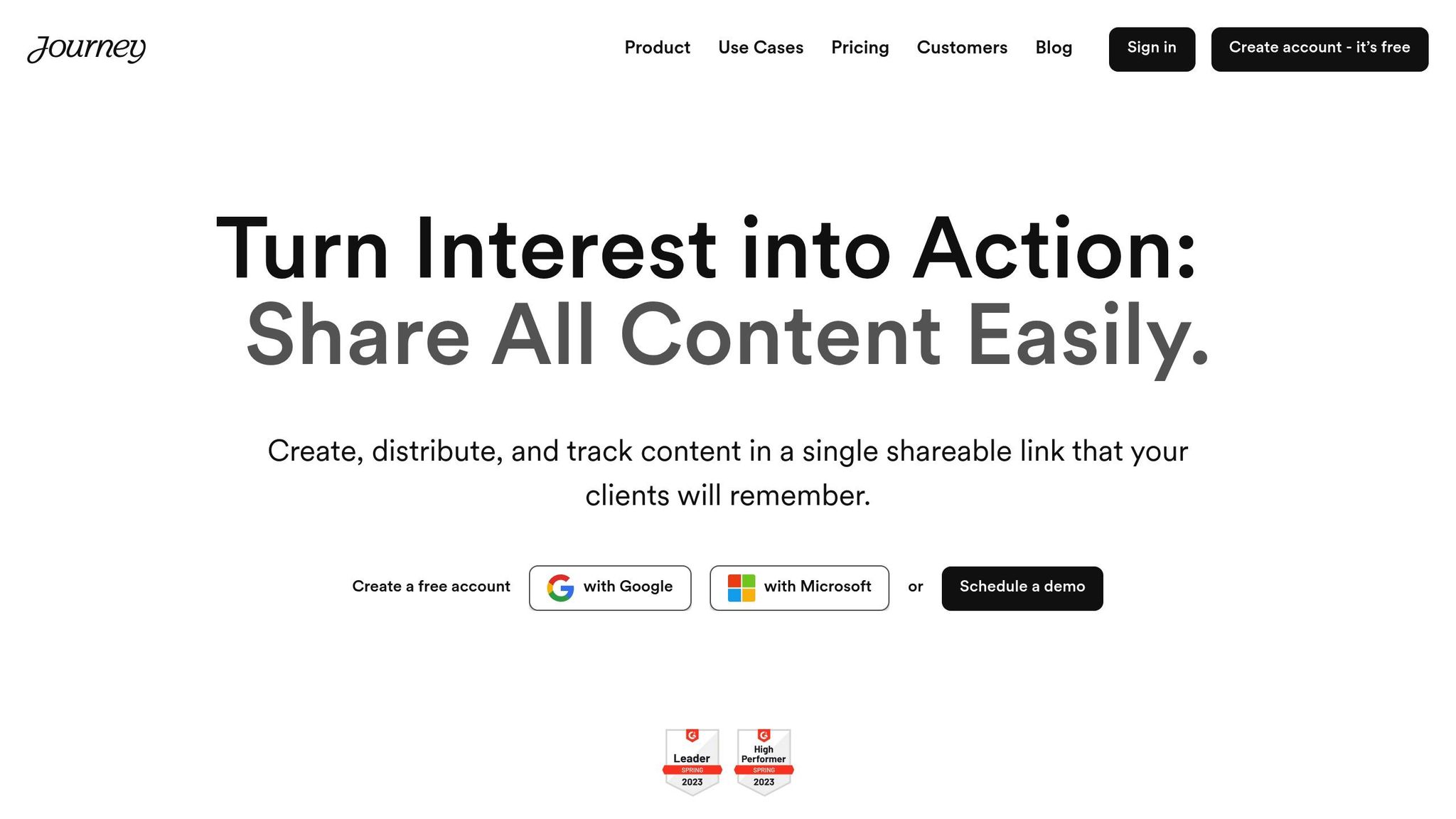
Journey.io equips B2B marketers with tools to create tailored content packages. Here's a breakdown of its features:
| Feature | Benefit | Application |
|---|---|---|
| AI Image Generation | Produces custom visuals instantly | Industry-specific illustrations and graphics |
| Dynamic Content Blocks | Organizes content flexibly | Custom presentations for diverse segments |
| Real-Time Analytics | Tracks engagement | Refines content based on viewer behavior |
| Interactive Elements | Boosts user interaction | Chatbots and feedback sections |
With Journey.io, marketers can develop:
- AI-generated visuals designed for specific industries.
- Custom videos featuring personalized overlays.
- Interactive charts and graphs.
- Designs that align perfectly with brand identity.
This approach allows B2B marketers to deliver content that feels tailored and impactful.
AI Video Tools for B2B Marketing
AI video tools are changing the game for B2B marketing by making professional video production faster and easier. These tools help marketers create polished, engaging content without the usual hassle.
Video Creation Software Guide
AI-powered video tools come with a variety of features designed for B2B marketing needs:
| Tool Type | Key Features | Best Use Cases |
|---|---|---|
| Text-to-Video | Script-to-video automation, Voice synthesis | Product demos, How-to guides |
| Video Enhancement | Background removal, Resolution improvement | Customer testimonials, Brand videos |
| Personalization | Dynamic text overlays, Custom thumbnails | Sales outreach, Account-based marketing |
These tools simplify video production, saving both time and money. For instance, marketers can use AI to create tailored product demos for different industries or company sizes. This automation not only speeds up the process but also allows for creating videos that resonate with specific audiences.
Custom Video Content
AI tools also make it easier to create personalized video content that connects with viewers. Here are some approaches:
- Dynamic Personalization: Add details like company names or industry data to make videos more relevant.
- Smart Editing: Automatically adjust and enhance video clips based on audience engagement data.
- Interactive Elements: Include AI-driven calls-to-action or prompts to encourage viewer responses.
With these features, B2B marketers can deliver content that directly addresses their audience's challenges and interests, keeping them engaged throughout the buyer journey.
Video Analytics and Improvement
AI doesn't stop at video creation - it also provides insights to help you improve your strategy. After producing videos, analytics tools can track key metrics such as:
- Engagement Patterns: Understand where viewers drop off or rewatch.
- Interactive Elements: Measure click-through rates on calls-to-action.
- Viewer Demographics: Gather data on industry, company size, and roles.
- Content Effectiveness: Analyze conversion rates and lead quality.
These insights allow marketers to refine their videos for better results. By combining AI-driven production tools with analytics, teams can focus on crafting the right message while letting AI handle the technical details. This approach ensures that your videos are not only engaging but also effective in driving business outcomes.
Tracking AI Visual Content Results
Visual Content Analytics
AI tools provide insights into how B2B audiences interact with visual content. These tools help identify which visuals resonate most by analyzing engagement patterns. For example, platforms like Journey.io allow you to track performance across various content types.
| Metric Type | What to Track | Why It Matters |
|---|---|---|
| Engagement | View duration, scroll depth, interaction rate | Shows how relevant and appealing your content is |
| Conversion | Click-through rates, form completions, content downloads | Highlights the direct impact on business goals |
These analytics lay the groundwork for testing different visual elements.
Testing Visual Content
Here’s how you can approach testing visuals effectively:
-
Define Test Parameters: Start with a clear hypothesis about what to adjust in your visuals, such as:
- Image type (photos vs. illustrations)
- Color palettes
- Layout styles
- Placement of calls-to-action (CTAs)
- Use Tracking Tools: Create multiple versions of your content and track their performance using analytics tools.
-
Analyze Results: Compare the performance of each version by looking at key metrics like:
- Engagement rates
- Time spent on content
- Conversion rates
- Sharing behavior
The data from these tests will help you decide which elements to focus on and refine.
Key Performance Metrics
To measure success, focus on these categories:
| Category | Key Metrics |
|---|---|
| Engagement | Average view time, interaction rate, social shares |
| Lead Generation | Form submissions, downloads, meeting requests |
| Revenue Impact | Influence on sales pipeline, deal speed, close rates |
To get the most out of your efforts:
- Set baseline metrics to measure improvements.
- Segment your audience and track performance by group.
- Look at trends over time to understand long-term impact.
- Use these insights to guide future content decisions.
As highlighted in our AI tools guide, these metrics are critical for shaping a more effective visual content strategy in the B2B space.
Conclusion: Next Steps in AI Visual Marketing
Key Takeaways
AI is reshaping B2B visual marketing by simplifying tasks like image creation, data visualization, personalized visuals, and video production. These advancements help marketers create engaging campaigns while keeping brand identity intact. Tools such as Journey.io allow users to package, share, and track multi-format content through shareable links, complete with real-time analytics.
The Future of AI in Visual Marketing
Looking ahead, AI is set to bring even more advanced features to visual marketing:
- Dynamic Personalization: Visuals that adapt instantly based on viewer behavior, creating more targeted and relevant experiences.
- Smarter Data Visualization: Tools that blend live data with interactive features to make complex information easier to understand.
- Ethical Practices: Transparency in labeling AI-generated content and protecting customer data while staying true to the brand’s voice.
To stay ahead, B2B companies should prioritize AI-driven visual strategies that align with the customer journey. Leverage analytics to refine content and boost engagement effectively.
Related Posts