

Sales Velocity Playbook: Close Deals Faster
Discover the practical ways to close deals faster, including the Sandler Pain Funnel and digital sales rooms."I wasn't hanging up the phone in between calls. I realized that by not hanging up the phone I gained another eight minutes a day. I wasn't drinking water, so I didn't waste any time in the bathroom. But even doing all this, after two months, I still didn't have time to work my way up a sheet."
It’s no wonder!
The quote above is from the heartwarming 2006 film The Pursuit of Happyness, a movie that’s often hailed for its insights into the sales world. It follows the journey of Chris Gardner, a door-to-door salesman who sells bone-density scanners for a living.
Now, while Gardner’s hustle is inspiring, his sales tactics might not be everyone’s idea of “success,” especially in B2B sales. See, as much as we wish sales were as easy as “X calls = X prospects = X customers,” it’s not that straightforward.
Just hitting up leads left and right in a numbers game can sometimes backfire, leaving you with missed opportunities and lukewarm leads.
So, if you’re aiming to improve your sales velocity, your focus should be on relationships. To build them, you need to maximize interactions and, most importantly, tap into relevant data to understand your potential clients inside out.
Let’s see the practical ways you can close deals faster, even with the toughest of stakeholders!
Connect with Key Decision-Makers and Stakeholders
Gardner calls for Mr. Walter Ribbon, pension fund manager and CEO, directly for an opportunity to discuss his products in person. Mr. Ribbon readily accepts the offer.
If you’re in B2B, this moment may have made you laugh. If only it were that easy!
It would be delightful if there was only one decision-maker to convince. We can't take our sweet time calling and emailing each one of our own “Mr. Ribbons,” or we'd be more burnt out than Gardner himself.
What we need is a solution that helps us centralize the most important messages for all stakeholders involved, preventing any key sales points from getting buried into email chains, non-salespeople’s words, or simply ignored.
Discover the Real Causes of Your Prospects’ Pain to Speed up Sales Velocity
During an internship he attended, Gardner heard the following words:
“You will mainly be cold-calling potential clients. But if you have to have lunch with them, have breakfast with them...even babysit for them, do whatever it takes to familiarize them with our packages. We need you to match their needs and goals to one of our many financial plans.”
If there's anything you can take from this quote, it's that you need to match your prospects' needs and goals.
And for that to happen, you need to prove to them that you understand the pain points they're going through, as well as the dream states they want to achieve. And you can only get this information by establishing rapport with them.
Enter: Sandler Pain Funnel (with Examples)
The most structured way to establish rapport and identify what deeply pains your prospects is to emulate David Sandler’s sales technique, the so-called Sandler Pain Funnel questioning.
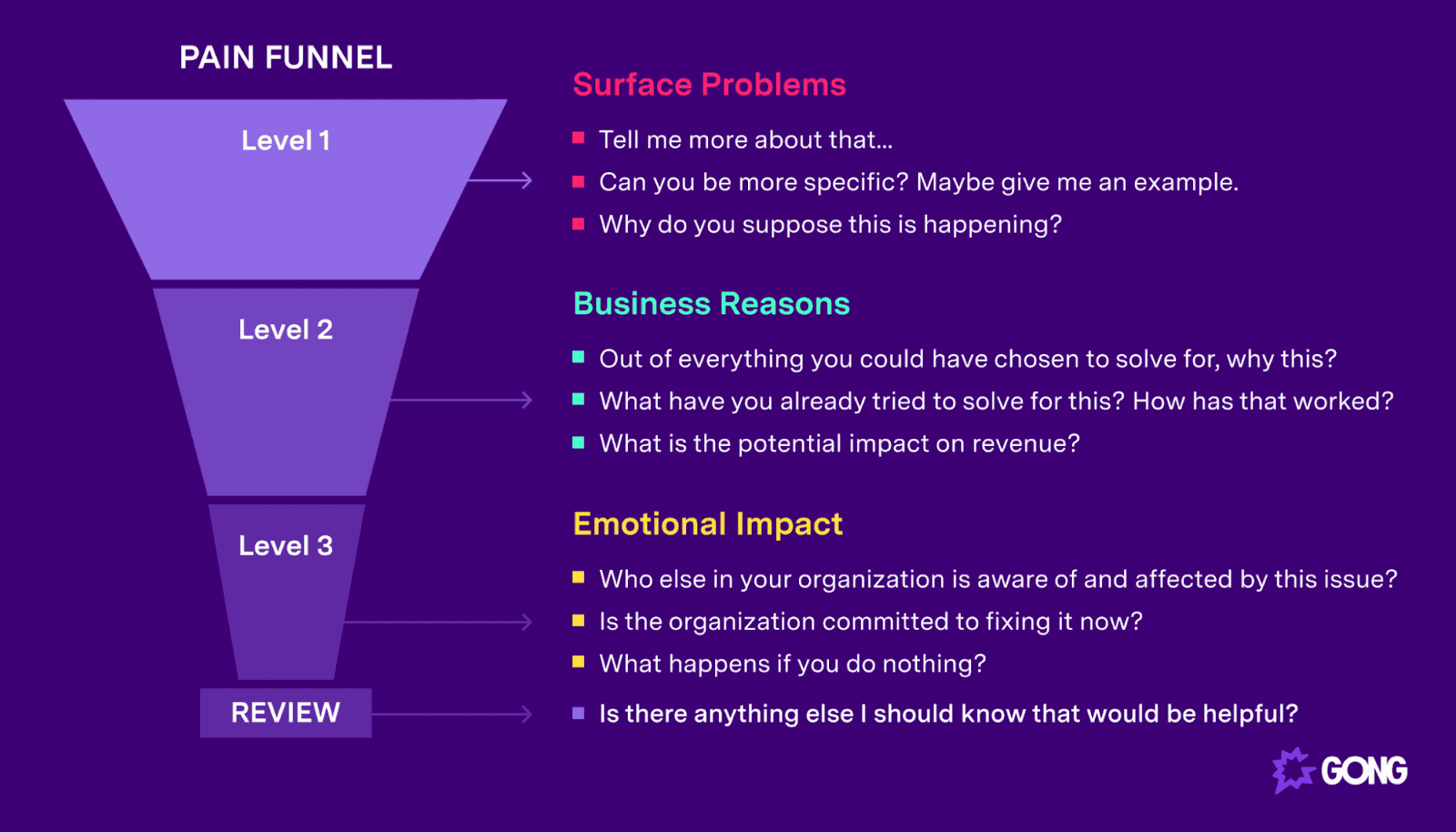
Source: Gong.io
It's designed to help sales professionals uncover and understand the prospect's pain points or challenges to position their product or service as a solution. The Pain Funnel questioning technique involves asking a series of progressively deeper questions to explore the prospect's problems, frustrations, and needs.
For instance, at the surface level, you might ask about general business challenges, such as decreasing revenue or increasing competition.
As the conversation progresses, you delve deeper, asking more specific questions like, “How has the rise in competition affected your profit margins?” or “What obstacles are preventing your team from achieving its sales targets?”
This gradually leads to the uncovering of more profound concerns, such as operational inefficiencies or inadequate resources. At that point, it’s time to start talking about emotions and consequences: “What happens if this issue isn’t resolved?” or “How does the issue affect your team’s results?”
Once you pinpoint these pain points, you can tailor their pitch accordingly, demonstrating how their offering directly addresses the prospect's underlying needs.
Let’s see how it works in practice!
Suppose you’re selling CRM software to a company that's facing challenges with managing its sales process and customer interactions. Here's how you could tailor your pitch using the insights gained from the Pain Funnel questioning:
- Surface Level Pain Point: The prospect mentions they're struggling with keeping track of leads and managing customer relationships effectively.
- Deeper Pain Point: Their current system is outdated and lacks automation, resulting in missed follow-ups and lost opportunities.
- Profound Pain Point: Their sales team is spending too much time on administrative tasks, leading to decreased productivity and lower sales performance overall.
Knowing this, your tailored pitch might sound something like this:
"Based on our conversation about your challenges in managing leads and customer relationships, it sounds like your team is feeling the strain of manual processes and outdated systems.
Our CRM software offers advanced automation features that can streamline your sales process, so no lead falls through the cracks. With automated follow-ups, task reminders, and centralized customer data, your team can focus more on building relationships and closing deals rather than getting bogged down by administrative tasks. Plus, our analytics tools provide valuable insights to optimize your sales strategies and drive better results.
Once you implement our CRM, you won’t just address your immediate pain points but also pave the way for improved efficiency, productivity, and ultimately, increased revenue for your company."
Only 39% of a sales rep’s time is spent selling or interacting with prospects and customers. Don’t be the average rep. Spend more time truly listening to your prospects.
Know Where Your Product Intercepts the Prospect’s Need
Why could Gardner sell so many bone-density scanners even if they weren't the best products in the world? Because he knew the product inside and out.
He understood its features, its intended audience, and precisely where to find those who would benefit from it. Despite facing challenges, he even knew how to troubleshoot and fix the scanners when they malfunctioned.
Sales Velocity Is a Problem of Lead Qualification
The second part of the sales velocity equation is qualifying your leads to perfection, so you rarely come across people who don’t have an immediate need for your product. If you’re drowning in long sales cycles, you need to narrow down your ICP to the right segment.
Use data and CRMs to gather and analyze relevant data about your prospects. This could include demographic information, past interactions with your company, website behavior, and engagement with marketing materials.
Then, implement lead scoring models to prioritize prospects based on their fit and level of engagement.
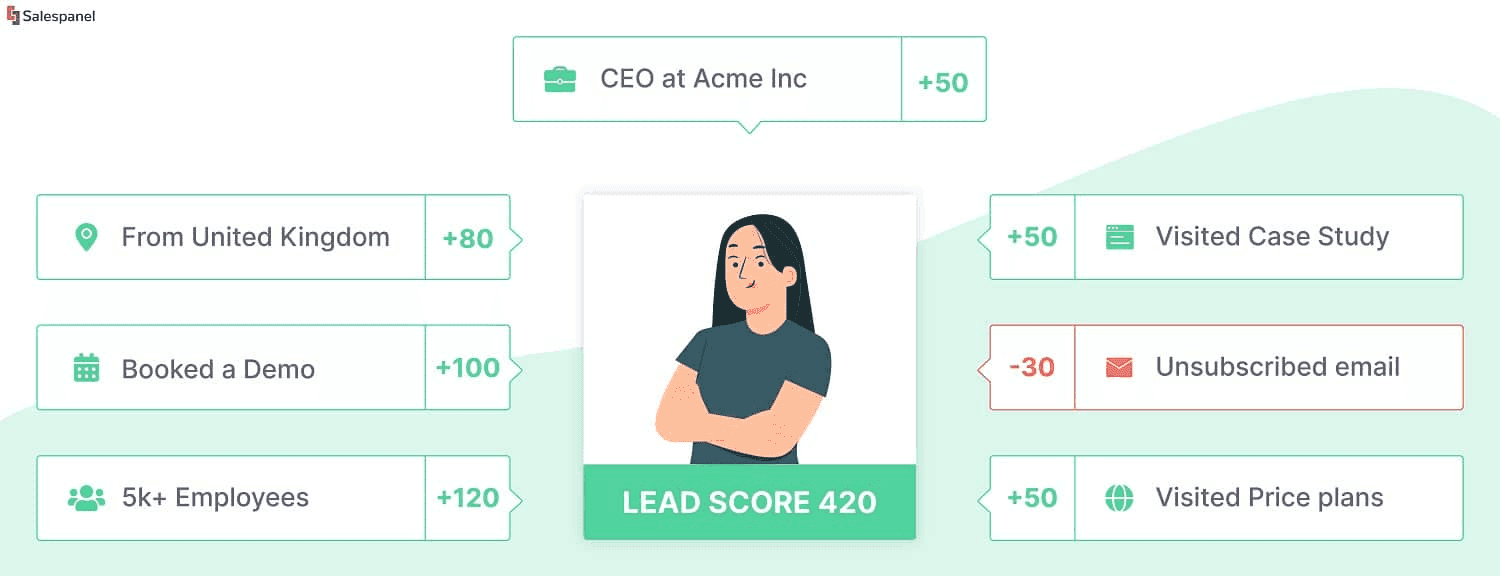
Source: Salespanel
Finally, analyze your most profitable customers regularly:
- What do they have in common?
- What does their decision-making process look like?
- Who is involved in their decision-making?
- How acutely do other stakeholders feel the need for a product like yours?
The real win happens when everyone who needs to make the decision sees how not making it leads to dire straits. And if not everyone is aware, it’s up to you to help them understand.
Don’t Get Shy with Objections
Whenever I want to speed up my deals, I double down on handling objections preemptively.
We’re all adults here – both you and the prospect are aware that they are going to have some objections. If you’ve used the Sandler pain funnel questioning, you know what they might be, so handle them before the prospects can talk themselves out of giving you a shot:
- Integrate responses to anticipated objections into your presentation by providing information, examples, or explanations that preemptively address the prospect's concerns.
- Share success stories, case studies, or examples of how other customers have overcome similar objections and achieved positive outcomes.
- Emphasize the unique value proposition and how it directly addresses the prospect's needs and challenges.
- Be upfront and transparent about any limitations or potential drawbacks.
Once you’re done, ask the prospect if they have any lingering concerns. Then, take notes in every call and jot down the objections that appear frequently to strengthen your arsenal.
Study Your Competition
Gardner knew that the bone-density scanner provided a slightly denser image of an X-ray for double the price. With such a hefty price tag and only marginal benefits, it's no wonder many of his pitches fell flat.
Fortunately, your product likely has a clear value proposition. There's at least one aspect where it outshines the competition, and you probably know it like the back of your hand by now. But to truly capitalize on your competitive advantage, you need to understand where your competitors fall short. By pinpointing these areas, you can amplify your product's winning attributes.
Map your competitors’ weaknesses to stakeholder needs. How do their shortcomings align with the buying committee’s needs?
For example:
- If the IT department needs robust integration capabilities, but a competitor's product lacks seamless integration with existing systems, highlight this discrepancy during presentations to IT stakeholders and add it to your digital sales room materials.
- If the finance department prioritizes cost-effectiveness and scalability, but a competitor's pricing model is rigid and expensive, emphasize your company's flexible pricing options and scalability features during discussions with finance representatives.
If you can't articulate exactly how your product will save prospects time, money, sanity, or all three, you're giving them ample reason to second-guess their decision. That's why it's crucial to continually assess the competition and ensure that you're communicating the unique benefits of your product.
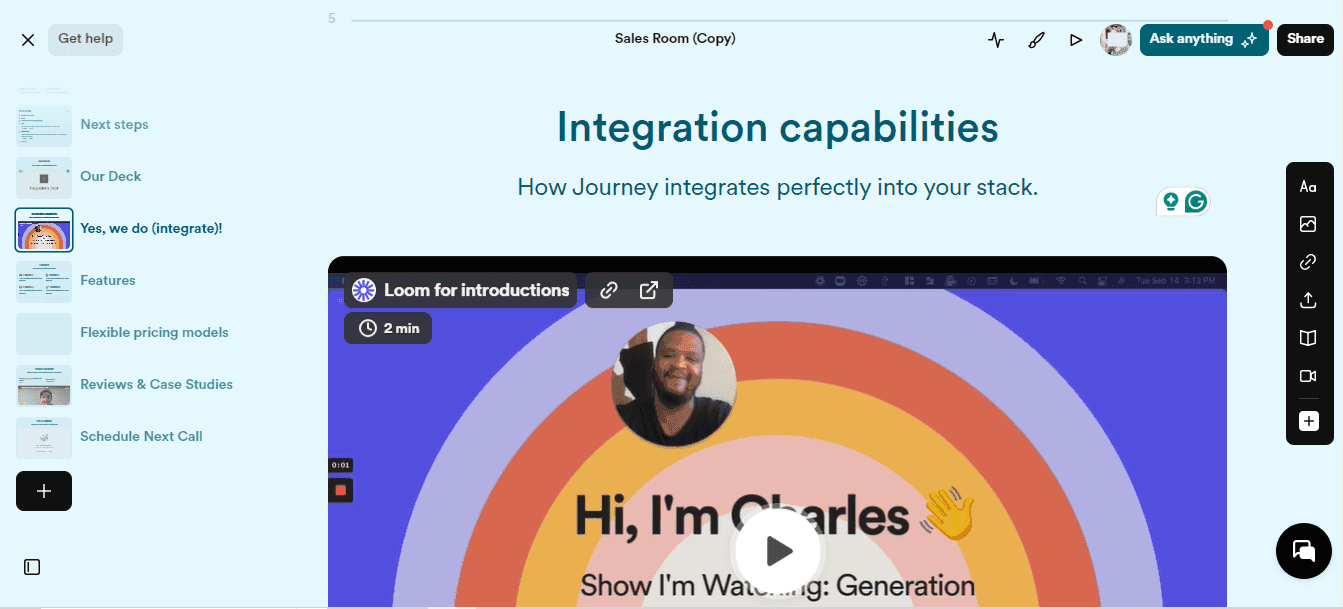
Your digital sales room is the perfect place for comparisons, benchmarks, and studies proving you fit the prospects’ needs better than the competitors.
Consistently Work on Your Sales Velocity
“Say you’re closing deals at an excellent rate—you should meet your quota for the month. But what about next month? In sales, consistency is key. When you don’t have a framework for successful sales, you won’t be able to predict your sales for tomorrow, let alone next month or next quarter.”
This quote by Zendesk perfectly illustrates how crucial it is to stick to a single process. Gardner went through the feast-and-famine stages of sales. He experienced periods of drought, where he didn't sell for months on end, followed by bursts of success where he sold multiple machines in a short period.
Create a sales velocity framework, so you can spend less time reinventing the wheel or wondering where the problem truly is.
Your Sales Velocity Framework
- Set Your North Stars: Look at key metrics at every deal stage, such as conversion rates, average deal size, sales cycle length, and win rates. They will be your benchmarks and your guides to improving the sales velocity of specific pipeline stages.
- Identify Bottlenecks: This could include slow response times, lengthy sales cycles, or low conversion rates at certain stages of the funnel.
- Prepare Hypotheses and Tactics for Bottlenecks: Prepare 3-5 tactics for the peskiest bottlenecks and set a timeframe within which you will test them. For example, if slow response times are a problem, a hypothesis might be that implementing automated lead nurturing emails could speed up the sales process. If you struggle to secure approval from the entire committee, you might try account-based selling.
- Measure and Document: Review your metrics regularly and document the findings. Then, reassess the results and test again based on your new hypotheses.
In improving sales velocity, I find it’s best to adopt the engineering mindset. Think of the process as a machine that should deliver deals faster. If it’s not, look at every cog to see which one needs more grease, and then find the suitable grease type to make it run smoother.
Digital Sales Rooms Improve Your Sales Velocity
Log into G2 or Product Hunt, and you'll see no shortage of 5-star-reviewed software claiming to do a million and one things for your sales cycle. But here's the thing: you don't need software for this and software for that.
What you need is just one tool that excels at improving B2B sales velocity.
You need Journey – a digital sales room tool that makes it easy for champions to share resources with key decision-makers.
Provide Information That Helps Make Decisions Faster
Getting a buying committee to decide in less than three months is a bit like herding cats – if you do it manually. But with a Journey digital sales room, you can present the right information at the right time.
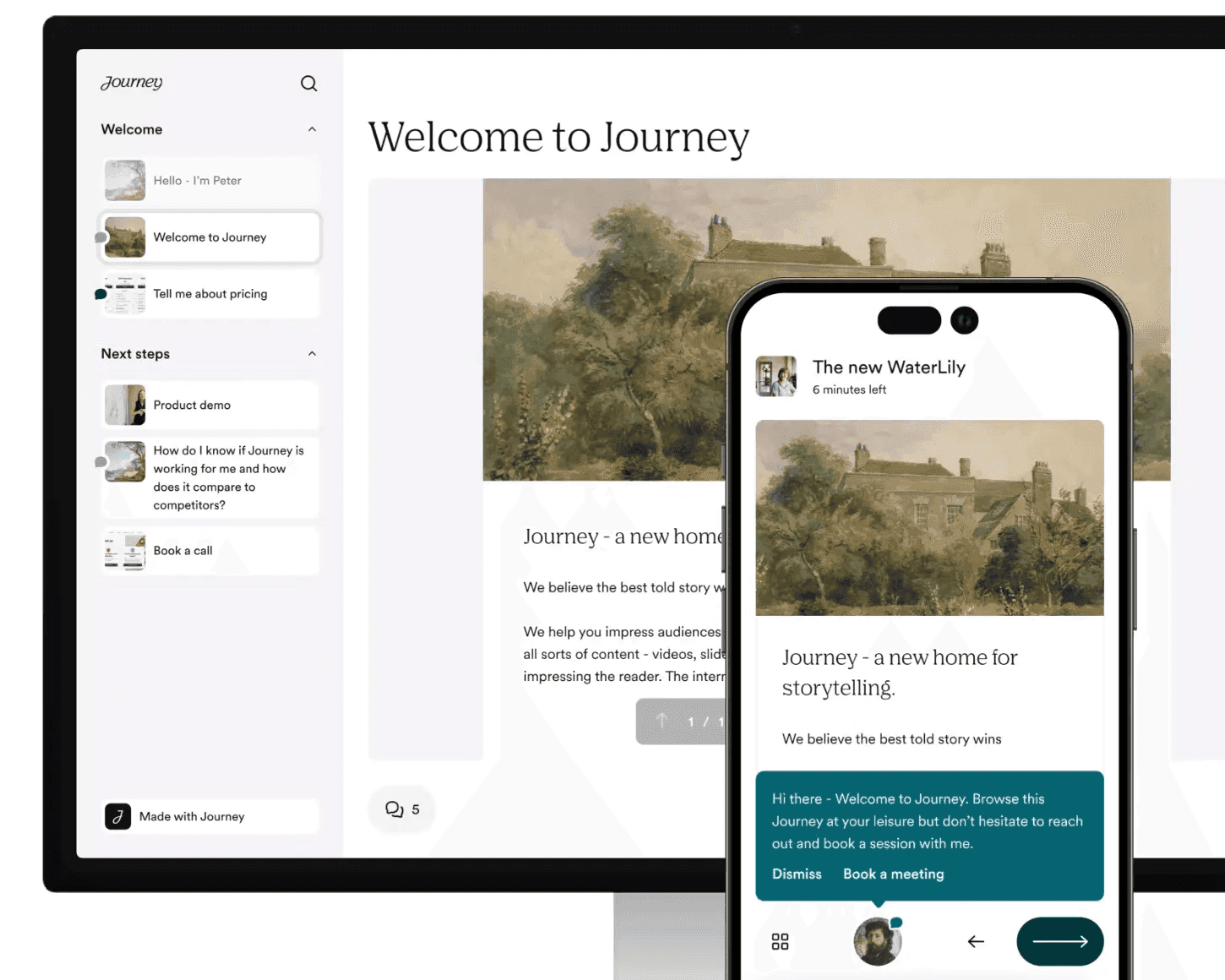
This includes essential information such as:
- Social proof, featuring testimonials that address every stakeholder’s objections and desires.
- Case studies highlighting successful implementations and ROI on individual stakeholders’ priorities.
- Supporting materials that provide context.
- Demos and Gong recordings.
- Interactive checklists, Calendly calendars, and even chatbots!
As one of our customers rightly pointed out, “We can build out a very personalized single link that makes it easy for our prospects to share the right resources with key stakeholders. It helps us move opportunities through the sales process."
Imagine having everything your prospect needs to know about your product – all the comparison tables, every feature, benefit, and testimonial – accessible in one easily reachable place.
Impress Prospects and Establish Trust from the Beginning
Your stakeholders could use a breather from mundane sales decks to storytelling journeys that boast fresh and intuitive designs like this:
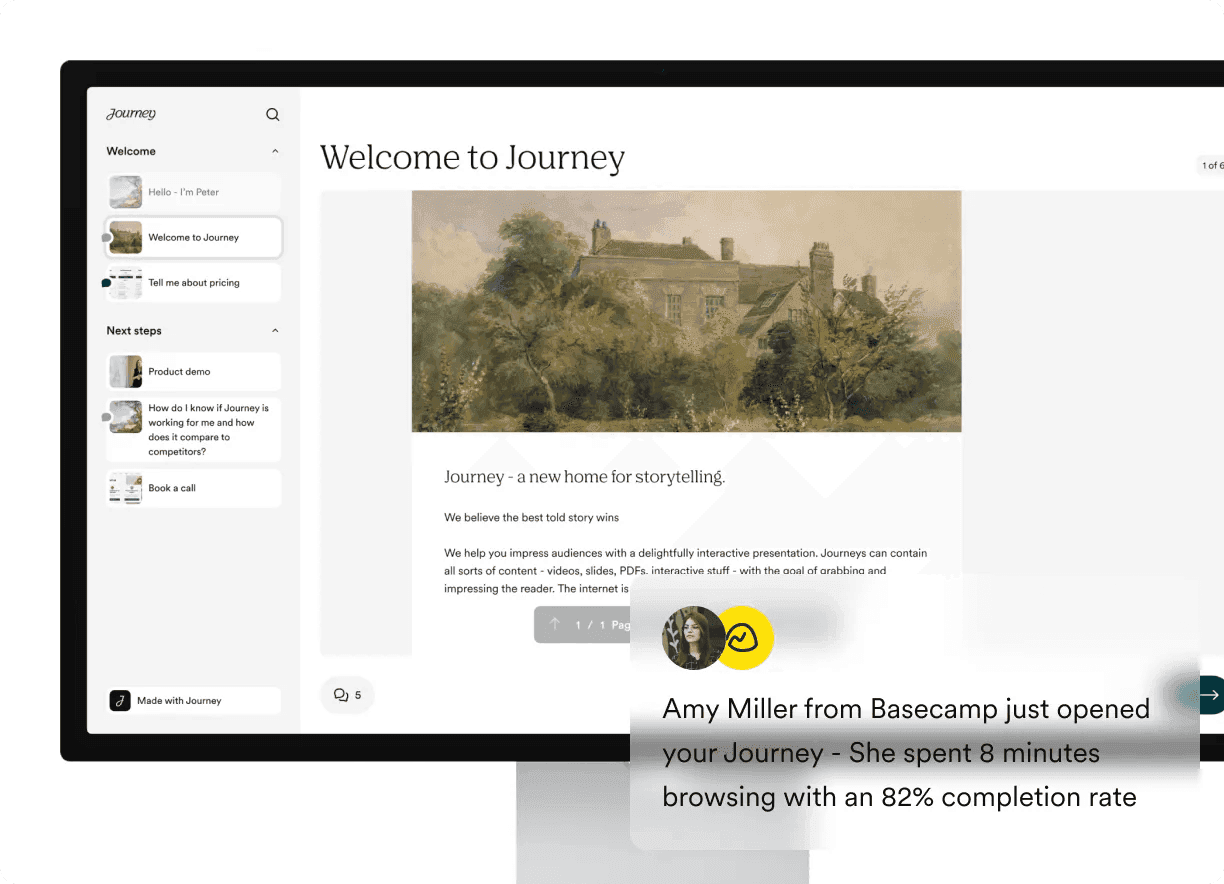
I’m talking about bundling everything you'd typically include in a follow-up email – materials that often yield dismal open rates. You know…
- Demos
- Walkthroughs