
Are your valuable resources disappearing into the void?

Are your valuable resources disappearing into the void?
Companies waste up to 30% of their revenue due to inefficiencies. Time, technology, and data are often poorly utilized, leading to missed opportunities and reduced customer satisfaction. Here’s a quick breakdown of the problem and solutions:
- Time: Over 25% of the workweek is lost to repetitive tasks.
- Technology: 40% of software features go unused.
- Data: 98% of companies fail to fully leverage data insights.
- Revenue: Inefficiencies cost 20–30% of total revenue.
Key Fixes:
- Streamline Onboarding: Simplify processes to reduce delays and improve customer satisfaction.
- Leverage Data Effectively: Use analytics to predict and prevent issues.
- Personalize Customer Journeys: Tailor experiences to individual needs for better engagement.
Companies that address these inefficiencies are 17x more likely to see profitability gains of over 15%. Start by centralizing resources, tracking key metrics, and optimizing workflows to turn waste into results.
STOP THE BLEED: 5 Process Optimization Strategies to ...
Common Resource Waste in Customer Activation
B2B SaaS companies often lose resources during customer activation, with ineffective onboarding contributing to a 23% customer churn rate. To address this, it's important to identify and resolve three common issues that hinder efficiency and reduce customer value. Below, we explore how missteps in onboarding, rigid processes, and neglecting data can lead to wasted resources.
Broken Onboarding Steps
Poorly designed onboarding processes can overwhelm support teams and delay customer success. Zendesk offers a clear example. Before revamping their onboarding, their fragmented approach caused inefficiencies. After optimization, they saw dramatic improvements:
| Impact Area | Before | After |
|---|---|---|
| Time-to-Value | Standard baseline | 50% reduction |
| Feature Adoption | Limited first-month usage | 30% increase in 30 days |
| Support Load | High ticket volume | 25% decrease in tickets |
Rigid, One-Size-Fits-All Approaches
Standardized activation methods often fail to meet individual customer needs, wasting resources and missing opportunities for engagement. HubSpot experienced this firsthand. By introducing role-specific onboarding paths, they achieved the following:
- 65% increase in feature adoption within 60 days
- 50% cut in time-to-first-value
- 35% boost in customer satisfaction scores
Overlooking Data Insights
Ignoring user data during activation can lead to poor decision-making. Shopify's case is a prime example. Initially, only 45% of new users completed store setup in their first week. After integrating analytics-driven strategies, they saw major improvements:
- Store setup completion rose to 70% within the first week
- New store launches increased by 40% within 30 days
- Support contacts during onboarding dropped by 35%
Using data effectively, as seen with companies like Trello, not only enhances user engagement but also reduces churn.
It's worth noting that nearly two-thirds of customers consider a company's onboarding process when deciding to make a purchase. Efficient and tailored activation strategies can make all the difference.
sbb-itb-e400484
How to Fix Customer Activation Issues
Addressing customer activation challenges requires targeted strategies that eliminate inefficiencies and deliver measurable improvements.
Improving Onboarding
Intuit revamped its onboarding process by adding a guided setup, AI-driven assistance, and video tutorials. The result? A 60% boost in daily active users and a 45% drop in support calls.
To build an effective onboarding experience:
- Gradually introduce features using progressive disclosure.
- Set clear milestones to help users track their progress.
- Offer support across multiple channels, including in-app guides, video tutorials, and live customer assistance.
Using Data Effectively
Modern analytics tools can uncover patterns and improve user experiences. Predictive analytics, for instance, can identify potential problems before they escalate into larger issues. Here’s how to make data work for you:
- Monitor usage patterns to spot trends.
- Use automated check-ins to stay connected with users.
- Develop health scores by combining various data points to predict and prevent churn.
Creating Personalized User Journeys
Tailored experiences are key to engaging customers. Studies show that companies focusing on customer-centric journeys can see a 10–20% revenue increase and lower costs by 15–25%.
"Seamless, personalized interactions are expected. Consumers are consumers in all parts of their lives - work and home - so if they are getting robust personalization in one area, they expect it everywhere."
To enhance personalization:
- Combine data from various sources to create detailed user profiles.
- Automate workflows based on user behavior.
- Track customer sentiment in real time.
- Design journeys that adjust to changing user needs and goals.
How Journey.io Stops Resource Waste
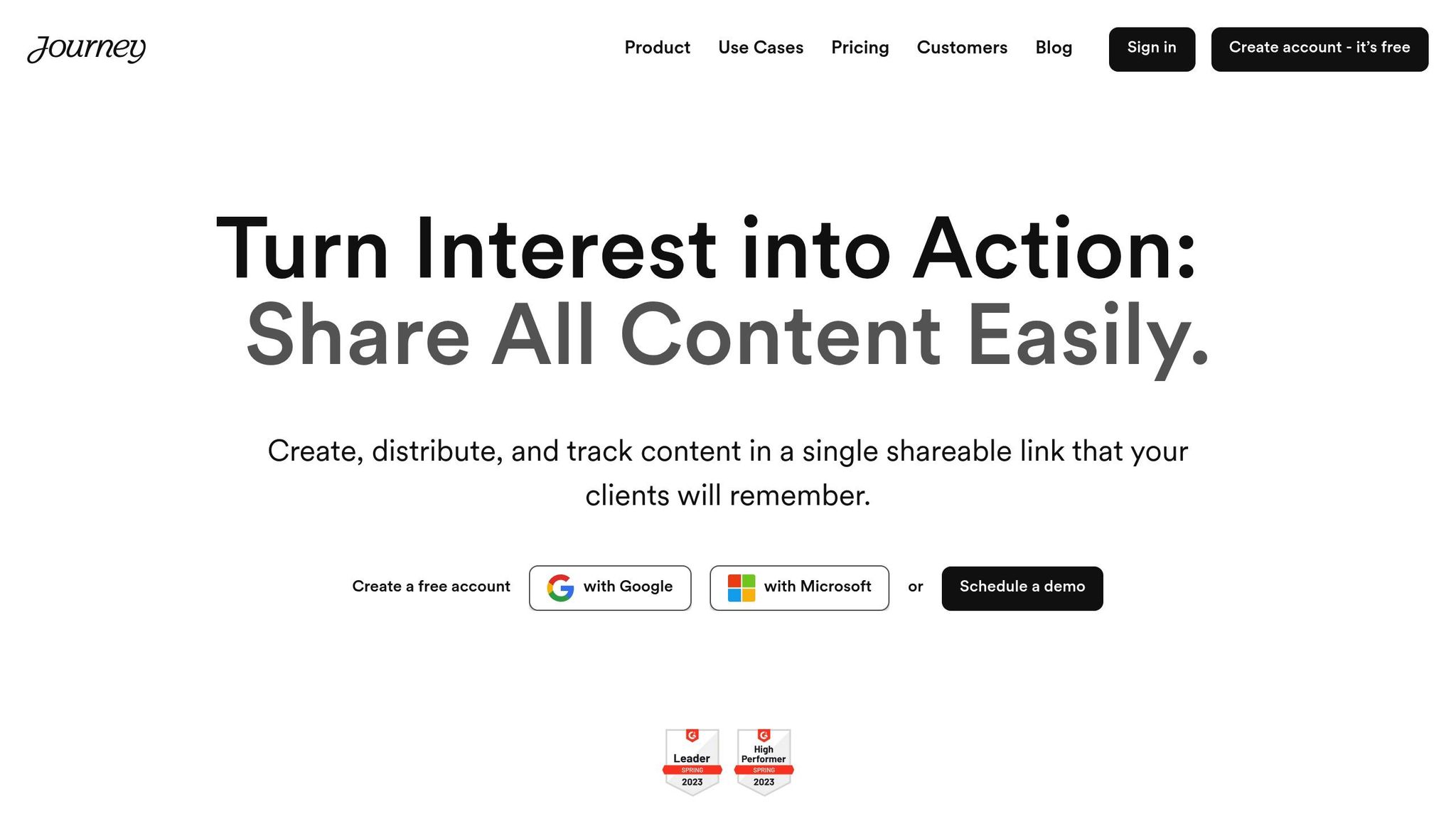
Journey.io tackles activation challenges by bringing key functions together in one efficient platform, streamlining customer activation efforts.
-
Smart Content Management
Journey.io simplifies content sharing with a single, shareable link. Teams can combine PDFs, videos, text, and AI-generated visuals in one place, making it easy for customers to access the right materials. A dynamic table of contents helps users quickly find what they need. -
Real-Time Analytics and Engagement
The platform’s analytics provide immediate insights into how customers interact with shared content. Teams can identify which materials have the most impact and adjust onboarding strategies based on real-time data. -
Customizable Activation Flows
Journey.io allows teams to create tailored activation flows that match customer needs. Key features include:
| Feature | Business Impact |
|---|---|
| Mutual Plans | Track progress and align on key milestones |
| Interactive Chatbots | Offer instant support and guide users effectively |
| Comment Systems | Enable direct feedback and collaboration |
| Custom Branding | Deliver consistent, professional experiences |
-
Seamless Integration
With integrations for tools like Google Drive and Gong recordings, Journey.io automates workflows, allowing teams to focus on more strategic tasks. -
Security and Control
Advanced security features, such as password protection and IP whitelisting, keep sensitive resources safe while ensuring they remain accessible to authorized users. These controls reduce delays and cut down on support requests.
Next Steps: From Waste to Results
It's time to rethink your customer activation strategy. Start by reviewing your onboarding process for any gaps, organizing resources in one place, and improving how you communicate with customers.
These changes can turn wasted time and effort into measurable outcomes.
Follow these steps to build an effective activation strategy:
-
Review Your Content Distribution
Take a close look at how you're currently sharing resources. Measure how much time is spent searching for documents, answering repetitive questions, or juggling multiple platforms. This will give you a baseline to track improvements. -
Centralize Your Resources
Create one go-to location for all customer-facing materials. Organize them based on the customer journey - from onboarding to ongoing milestones. This makes it easy for customers to find what they need, when they need it. - Define Success Metrics
| Metric | Target | Impact |
|---|---|---|
| Resource Access Time | Under 30 seconds | Faster customer responses |
| Content Engagement | 80%+ completion rate | Higher adoption rates |
| Support Requests | 50% reduction | Greater efficiency |
| Time to Value | 30% decrease | Improved satisfaction |
Start by creating a centralized hub for your most important onboarding resources. Make sure it’s easy to navigate and helps guide customers through key milestones. Use analytics to track which materials are performing well and adjust your approach as needed.
By organizing your resources effectively, you’ll create a smooth experience that gets results. A well-structured system not only saves time but also turns scattered materials into tools that drive customer success.
Don’t let disorganized resources hold you back. Consolidate your customer activation materials now and start seeing real improvements.
Related Posts