

5 Best Practices for Sharing Sales Content with Prospects
Learn effective strategies for sharing sales content that engages prospects and drives conversions through targeted approaches and the right tools.Sharing sales content effectively can boost engagement and drive conversions. Here are the 5 best practices you need to know:
- Create Targeted Content: Personalize materials based on prospect data, such as demographics, behavior, and engagement patterns. Use industry-specific case studies and custom content packages to address their unique challenges.
- Use the Right Tools: Leverage platforms like CRMs, email tools, and content-sharing software (e.g., Journey.io) to streamline sharing, track engagement, and organize resources.
- Align Content with Buyer Stages: Match content to where prospects are in their journey - educational pieces for awareness, case studies for consideration, and demos for decision-making.
- Leverage Social Media: Adapt content for platforms like LinkedIn, Twitter, and Facebook. Engage directly with prospects and track metrics like clicks, comments, and conversions.
- Track and Improve: Monitor engagement, interaction, response, and conversion metrics. Use insights to refine timing, formats, and strategies for better results.
Quick Comparison: Tools for Content Sharing
| Tool Type | Purpose | Features to Look For |
| Email Platforms | Sending personalized content | Automation, tracking, templates |
| CRM Systems | Managing prospect data | Interaction history, analytics |
| Content Platforms | Organizing and sharing files | Secure sharing, engagement metrics |
Start by tailoring your content, using the right tools, and tracking performance to ensure your strategy delivers results.
How to Get Your Sales Team Sharing Best Practices
1. Create Targeted Content for Each Prospect
Personalized content that directly addresses a prospect's challenges can make all the difference. Sales teams can use data insights to create content that resonates with their audience.
Use Data to Understand Your Prospects
The key to effective targeting starts with understanding your prospects through data. By analyzing different data types, sales teams can build detailed profiles that inform their approach:
| Data Type | Source | Insights Gained |
| Demographic | CRM Systems | Company size, industry, location |
| Behavioral | Website Analytics | Content preferences, browsing patterns |
| Engagement | Email Platforms | Response rates, content interaction |
For example, website analytics might reveal that prospects in a specific industry prefer technical details over pricing information. This insight can help you create content that aligns with their preferences, such as detailed documentation or technical guides.
Effective Personalization Techniques
Personalization goes beyond simply using a prospect's name. Here are some methods that work:
Industry-Specific Case Studies
Develop case studies that highlight success stories relevant to your prospect's industry. Focus on shared challenges and measurable outcomes. For instance, if you're targeting healthcare providers, showcase how another organization reduced administrative costs using your solution.
Custom Content Packages
Tailor content collections based on what your prospect engages with. If analytics show they're interested in security topics, compile a package that includes security certifications, compliance documents, and related case studies.
2. Select Effective Content Sharing Tools
Choosing the right tools can streamline your workflow and help you engage prospects more effectively. Sales teams today rely on integrated platforms to share and track content seamlessly.
Tools Every Sales Team Should Use
A solid content-sharing strategy usually involves three core platform types:
| Platform Type | Primary Purpose | Features to Look For |
| Email Platform | Sending content directly | Personalization, automation, engagement tracking |
| CRM System | Managing prospects | Interaction tracking, content history, contact data |
| Content Sharing Platform | Organizing content | Analytics, secure sharing, content packaging |
These platforms work together to create a cohesive and efficient content-sharing system.
Why Journey.io Stands Out for Content Sharing
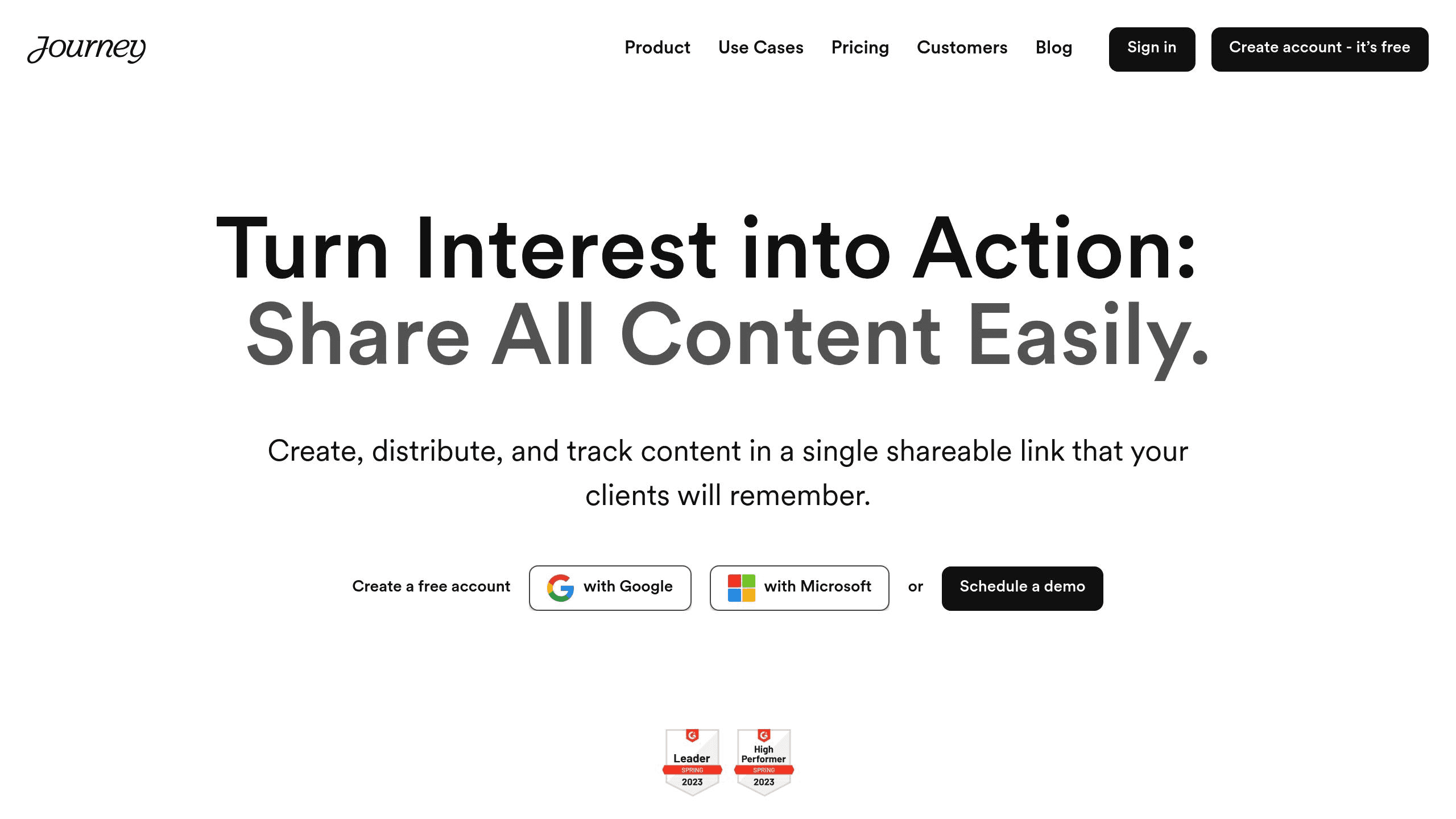
Journey.io’s Pro plan ($49/month) offers tools that help sales teams track engagement and securely share materials.
Here’s what makes it useful:
Real-Time Engagement Tracking
You’ll get detailed analytics that show how prospects interact with your content. This insight helps you understand what works best and when to follow up.
Secure Content Sharing
Protect your materials with features like password protection and whitelisting. Only the right people will see your content.
Content Packaging Made Simple
Easily combine PDFs, videos, and text into one shareable link. This keeps everything organized and improves the prospect’s experience.
3. Match Content to Buyer Journey Stages
To make your strategies more effective, align your content with the different stages of the buyer's journey. This ensures your message resonates at the right time.
Map Content to Buyer Stages
| Buyer Stage | Content Types | Purpose |
| Awareness | Blog posts, whitepapers, educational webinars | Introduce prospects to their challenges and potential solutions |
| Consideration | Case studies, product comparisons, detailed guides | Help prospects weigh their options and see the value of your solution |
| Decision | Product demos, customer testimonials, pricing details | Offer the final details needed to make a confident choice |
Tailor your content to each stage. For example, if you're offering financial software, start with resources that address common financial management issues during the awareness stage. As prospects move forward, shift to showcasing specific product features and benefits.
When to Send Different Content Types
Timing is everything. Pay attention to signals that indicate where prospects are in their journey:
- Early Stage Signals
- Browsing educational pages on your site
- Downloading general industry reports
- Signing up for newsletters
- Mid-Stage Signals
- Downloading multiple pieces of content
- Visiting product-specific pages
- Requesting demos
- Late Stage Signals
- Checking out pricing pages
- Attending multiple demos
- Reaching out to your sales team
For instance, if someone downloads a whitepaper on industry trends, follow up a few days later with a case study that highlights how your solution has helped similar businesses. Track metrics like open rates and engagement to fine-tune your timing and ensure your content reaches them when it matters most.
4. Share Content Through Social Media
Social media platforms provide excellent opportunities to share sales content with prospects, but each platform requires a tailored approach. Here's how to fine-tune your strategy to boost engagement.
Adapt Content for Each Platform
Not all platforms are the same, so your content shouldn't be either. Here's a quick breakdown:
| Platform | Content Type | Best Practices |
| B2B content, whitepapers, insights | Focus on data-driven posts | |
| Quick tips, industry news, updates | Use visuals and keep it concise | |
| Behind-the-scenes, live videos, polls | Encourage community interaction |
Repurpose your content to play to the strengths of each platform. For example, turn a detailed case study into LinkedIn posts highlighting key stats, or create Twitter-friendly snippets with eye-catching visuals.
Engage Directly with Prospects
Building real connections is key. Use tools like LinkedIn Sales Navigator to find decision-makers and track their activity. If prospects mention industry challenges, reply with helpful insights or resources to stay relevant.
Follow the 80-20 rule for your content: 80% should inform and educate using third-party content, while only 20% should directly promote your offerings. This keeps your audience engaged and positions you as a trusted resource.
Keep an eye on these engagement metrics to fine-tune your approach:
- Click-through rates: See how often your shared links are clicked.
- Comments: Evaluate the quality and frequency of interactions.
- Conversions: Track how many social interactions lead to meaningful actions.
Maintain consistent branding across platforms but adjust your tone to fit each one. LinkedIn calls for a professional tone, while Facebook allows for a more casual, conversational style.
Finally, sync your social media efforts with your CRM to keep track of interactions and follow up effectively. When prospects engage with your posts, use that information to personalize your next step - whether it's sending a case study or scheduling a demo. Tie these tactics into your overall content strategy to create a seamless experience across channels.
5. Track Results and Update Methods
Once your content aligns with the buyer's journey, the next step is to measure its impact and tweak your strategy as needed. Sharing content effectively means keeping an eye on performance and making ongoing adjustments.
Key Metrics to Track
To understand how well your content is performing, focus on these metrics:
| Metric Type | Metrics Tracked | Why It Matters |
| Engagement | Open rates, time spent, scroll depth | Reveals how appealing and relevant your content is |
| Interaction | Click-through rates, downloads, shares | Highlights the value and utility of your content |
| Response | Reply rates, meeting requests, inquiries | Shows how well your content drives action |
| Conversion | Sales pipeline movement, deal progression | Connects your content to revenue outcomes |
Use tools like your CRM and email analytics to track these metrics. Automating this process across emails, downloads, and site interactions can give you a complete picture of how prospects are engaging.
Turning Data Into Action
Dive into your tracking data to find patterns and opportunities for improvement. Here are a few areas to focus on:
- Timing: Pay attention to when your audience engages. If morning emails perform better, adjust your schedule accordingly.
- Preferred formats: Notice which types of content get the most traction. For example, if videos consistently outperform text, consider creating more video content.
- Content length: Look at completion rates to find the sweet spot for length. If longer pieces aren’t being finished, break them into shorter, easier-to-digest sections.
A/B testing can help fine-tune your strategy. Experiment with subject lines, content formats, and timing on small groups before applying changes across the board.
Make it a habit to review performance metrics every month. This helps you spot trends, double down on what works, and fix or phase out what doesn’t. By consistently refining your strategy based on data, you’ll stay aligned with your prospects' evolving needs.
Conclusion: Put These Content Sharing Methods to Work
Now that you know the best practices, it’s time to take action. Sharing sales content effectively means combining personalization, perfect timing, and smart use of tools.
Start with a clear plan: use CRM data to craft content that directly addresses your prospects' challenges. Automation tools can help you stay efficient while still keeping things personal.
Remember, content sharing isn’t something you set up once and forget about. Use performance data and feedback from prospects to fine-tune your approach. Teams that regularly adjust their methods see better engagement and stronger results.
Here’s a quick breakdown of the process:
| Phase | Key Actions | Goal |
| Setup | Configure CRM tools, create content templates | Build a solid foundation for personalized sharing |
| Engagement | Deliver content at the right time, align with buyer journey | Boost prospect interaction |
| Refinement | Monitor metrics, analyze results, tweak strategy | Drive higher conversions |
These steps tie back to the key practices we discussed earlier. The best sales teams also stay active on social media and track performance regularly, ensuring they build stronger relationships with prospects while increasing conversions. Start applying these steps today for noticeable results.